





The Global Table: How Tradition and Innovation Unite Through Flavor
Food is the universal language of heritage. Whether it’s a family gathering for a religious holiday or a quick weeknight dinner, the recipes we pass down define who we are. Today, a new tradition is emerging: the ability to enjoy these timeless flavors while embracing a plant-based lifestyle.
From the heart of the Middle East to the vibrant streets of Mexico City, culinary cultures are evolving. Let’s explore how the world’s most iconic traditions are meeting the future of food.
Faith and Flavor: The Big Three Traditions
Religious culinary traditions are rooted in community and specific dietary laws. Today, these ancient recipes are being reimagined for a modern, health-conscious, and ethical world.
1. Christianity: The Sunday Roast and Holiday Feasts
In American and European Christian traditions, food often centers around the Sunday Roast or celebratory hams and turkeys. Many are adopting “Meatless Fridays” or plant-based Lenten meals, swapping heavy meats for savory plant-based alternatives that retain that “center-of-the-table” prestige.
2. Islam: Halal Heritage and Iftar Traditions
Muslim cuisine is incredibly diverse, spanning from Indonesia to Morocco, with a focus on Halal preparation. During Ramadan, many families are experimenting with plant-based proteins for Iftar to feel lighter and more energized, finding that meat substitutes absorb traditional spices like cumin and sumac perfectly.
3. Judaism: Kosher Comfort and Continuity
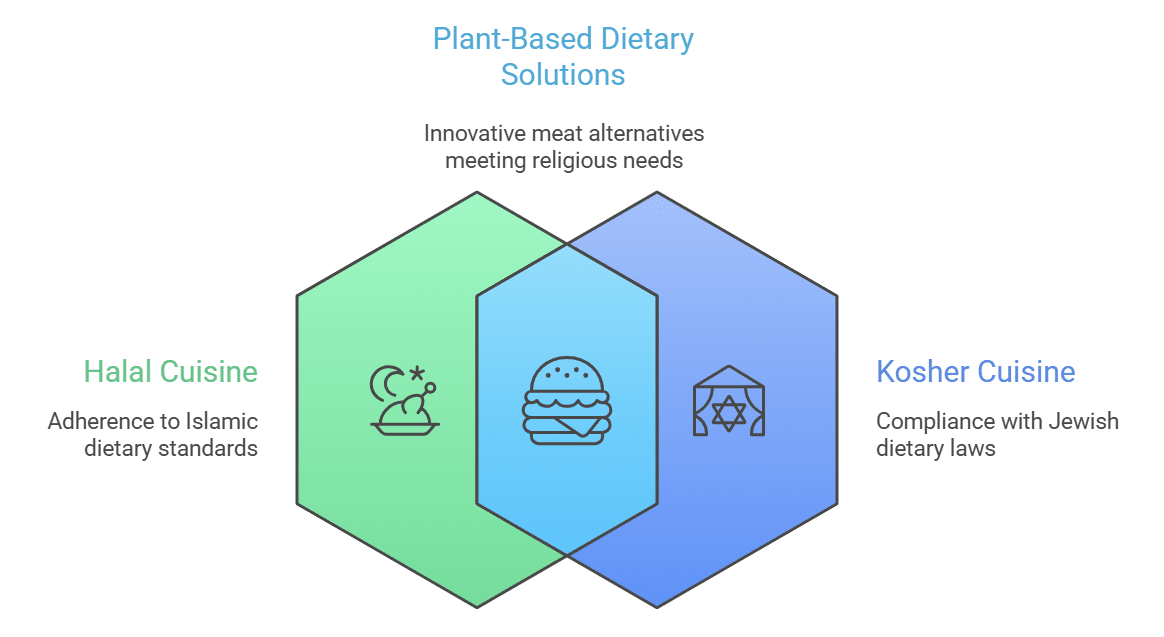
Jewish cuisine is a tapestry of Diaspora flavors, governed by Kosher laws (Kashrut) which forbid mixing meat and dairy. Plant-based meat is a “game-changer” for Kosher kitchens. Since it isn’t animal-derived, it allows for “cheeseburgers” or creamy meat sauces that were previously impossible under traditional laws.
A Journey Across Borders: Regional Culinary Deep-Dives
Asia: The Roots of Plant-Forward Eating
Chinese & Japanese: These cultures have used tofu and seitan for centuries. In China, the “Temple Food” tradition is the original vegan movement. In Japan, Shojin Ryori (Buddhist cuisine) focuses on the “Rule of Five” colors and flavors. Young Japanese and Chinese foodies are moving beyond tofu to high-tech meat alternatives that mimic the “bite” of beef in a hot pot.
Mexico: The Soul of the Spice
Key Themes: Earthiness, smoke, and vibrant acidity. Mexico is seeing a “Veg-Mex” revolution. Using plant-based crumbles in tacos allows for that classic charred texture without the heavy fats, keeping the tradition alive for the next generation.
Russia and the Balkans: Hearty and Humble
Key Themes: Preservation, fermentation, and “Sticking to your ribs.” In Eastern Europe, meat is often seen as a sign of prosperity. However, “flexitarianism” is rising. Swapping beef for plant-based alternatives in a Stroganoff maintains the creamy, umami-rich comfort while being much lighter on the heart.
The Ultimate Solution: Redefine Meat™
The biggest challenge in traditional cooking is the fear that “it won’t taste the same.” This is where Redefine Meat changes the game.
Whether you are a multi-ethnic family blending traditions, a religious household keeping Kosher or Halal, or simply a group of friends with different dietary preferences, Redefine Meat’s New-Meat*™ provides the perfect bridge.
- For the Meat Lover: It delivers the fibrous texture, juiciness, and “flame-grilled” aroma of high-quality beef.
- For the Vegan/Vegetarian: It offers a premium, uncompromising culinary experience.
- For the Chef: It behaves like traditional meat, allowing you to sear, roast, and slow-cook your family’s secret recipes.
You no longer have to choose between your heritage and your values. With Redefine Meat, every family-no matter their background-can sit at one table and enjoy the diverse, delicious flavors of the world without compromise.